Hydraulic Pump Spare Parts: Complete Guide to Components, Replacement and Selection
Hydraulic pumps operate under high pressure and demanding working conditions. Over time, internal components can wear, seals can deteriorate and performance can gradually decline. Fortunately, a complete pump replacement is not always necessary.
Many hydraulic pumps can be restored by identifying and replacing worn hydraulic pump spare parts. Understanding the main components inside a hydraulic pump can help repair shops, distributors, maintenance teams and equipment owners determine which parts may require inspection or replacement.
This guide explains common hydraulic pump parts, their functions, signs of wear and important considerations when sourcing replacement components.
At a glance
- Cylinder block, pistons and valve plate are the parts most often replaced in a rebuild.
- A scored valve plate is usually the first sign of contamination damage on Rexroth A4VG and A10VSO pumps.
- Check the regulator before condemning a variable-displacement pump.
- Rebuild when the housing is usable and parts are available; replace after catastrophic or multi-component failure.
- Send the full model number, machine details and a nameplate photo to get the right kit first time.
- Clean oil and correct filtration do more for pump life than any other single factor.
What are hydraulic pump spare parts?
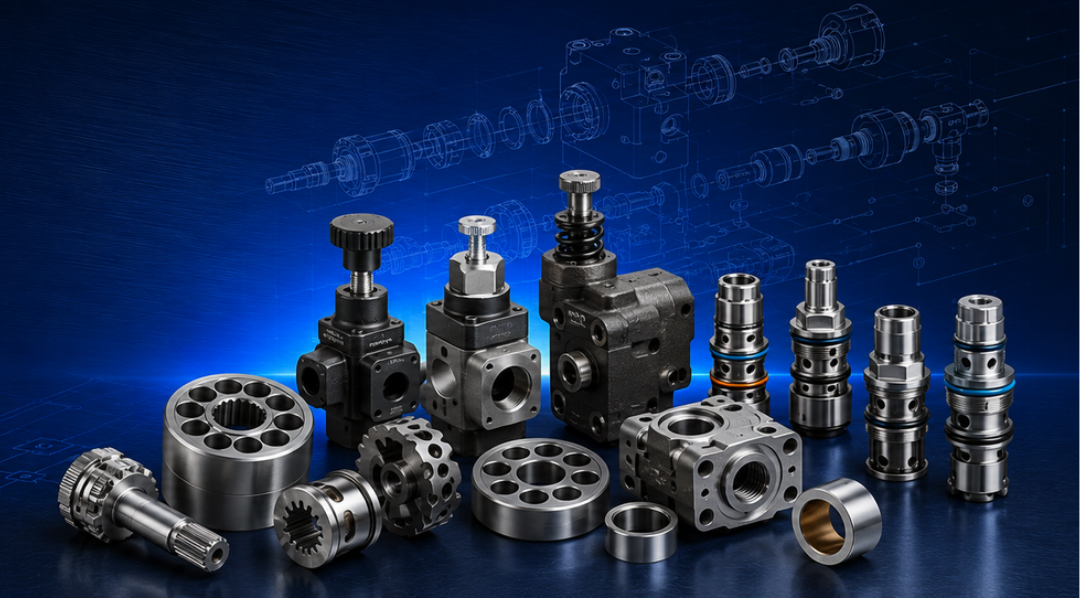
Hydraulic pump spare parts are individual components used to repair, rebuild or maintain hydraulic pumps. Depending on the pump design, replacement components may include cylinder blocks, pistons, piston shoes, valve plates, swash plates, drive shafts, bearings, seal kits, retainer plates, springs, regulators and pump housings.
These components must work together precisely to maintain hydraulic pressure, flow and efficiency. Even minor wear on critical surfaces can affect overall pump performance.
Main components of a hydraulic piston pump
A hydraulic piston pump uses multiple precision components to convert mechanical input into hydraulic fluid flow. Although designs vary between manufacturers and pump series, several components are commonly found across axial piston pump systems.
1. Cylinder block
The cylinder block is one of the central components inside many piston pumps. Multiple pistons operate inside precisely machined bores within the cylinder block.
Because the cylinder block operates continuously under demanding conditions, surface wear or contamination can reduce pump efficiency and increase internal leakage. Signs of cylinder block problems may include reduced pressure, excessive internal leakage, overheating, poor pump efficiency and abnormal wear patterns. The condition of the mating surfaces should be carefully inspected during a hydraulic pump rebuild.
2. Pistons and piston shoes
Pistons are responsible for moving hydraulic fluid through the pump. In many axial piston pump designs, each piston is connected to a piston shoe that moves against a swash plate. These components operate at high speed and under significant pressure.
Wear can result from poor lubrication, contaminated oil, excessive temperature, cavitation and long operating hours. Damaged pistons or piston shoes can significantly affect hydraulic pump performance. On a Kawasaki K3V112 the nine piston-and-shoe assemblies are typically replaced as a matched set with the cylinder block.
3. Valve plate
The valve plate controls hydraulic fluid movement between the inlet and outlet sides of many piston pumps. Its surface must remain smooth and precisely matched with the rotating cylinder block.
Scoring, scratches or excessive wear can create internal leakage and reduce volumetric efficiency. A worn hydraulic pump valve plate may contribute to pressure loss, reduced flow, excessive heat and poor pump efficiency. Valve plates are therefore commonly inspected during pump repair, and on Rexroth A4VG and A10VSO units the valve plate is usually the first part to show contamination damage.
4. Swash plate
The swash plate plays an important role in many axial piston pump designs. Its angle influences piston movement and, in variable displacement pumps, determines pump displacement.
Wear or damage to the swash plate can interfere with smooth piston operation. Technicians should inspect its contact surfaces for scoring, unusual wear and physical damage during a pump rebuild.
5. Drive shaft
The drive shaft transfers mechanical power from the engine or motor into the hydraulic pump. Drive shafts must withstand continuous torque and rotational forces.
Potential problems include shaft wear, damaged splines, bearing surface damage, misalignment and cracking. A damaged drive shaft should be replaced before the hydraulic pump is returned to service. Worn splines are common where a drive coupling has been running with the wrong alignment.
6. Bearings
Bearings support rotating components and help maintain proper alignment. Worn bearings may cause excessive vibration, abnormal pump noise, shaft movement and internal component damage. Ignoring bearing problems can eventually damage more expensive components inside the hydraulic pump.
7. Hydraulic pump seal kits
Seals prevent hydraulic fluid from escaping and help separate different pressure areas within the pump. A typical hydraulic pump seal kit may contain several seals, O-rings and gaskets depending on the pump model.
Common signs of seal problems include external oil leakage, pressure loss, oil around the shaft and frequent fluid level reduction. Always use seals designed for the correct pump model, hydraulic fluid and operating conditions.
8. Retainer plates and springs
Retainer plates, springs and related components help maintain the correct positioning and movement of piston assemblies. Although these parts may appear relatively small, they play an important role in maintaining reliable pump operation. Damaged components should be replaced during rebuilding rather than reused.
9. Hydraulic pump regulators and controls
Variable displacement hydraulic pumps use regulators or control assemblies to adjust pump displacement according to system requirements.
A malfunctioning regulator can cause incorrect pressure, irregular pump output, slow equipment response, excessive engine load and failure to change displacement correctly. Before replacing the entire hydraulic pump, the regulator and control components should be inspected. We supply replacement Kawasaki regulators for K3V and K5V excavator pumps as a separate item.
Signs hydraulic pump parts need replacement
Hydraulic pump wear often develops gradually. Common warning signs include reduced hydraulic pressure, slow equipment operation, excessive noise, pump overheating, oil leakage, increased vibration, reduced flow, metal particles in hydraulic fluid and irregular hydraulic operation.
When these symptoms appear, technicians should inspect the complete hydraulic system rather than immediately assuming the pump is responsible. Our hydraulic pump troubleshooting guide walks through each symptom in detail. If the pump is identified as the problem, internal inspection can determine which hydraulic pump replacement parts are required.
Why hydraulic oil cleanliness matters
Hydraulic pumps contain precision-machined components operating with extremely small clearances. Contamination can therefore have a major effect on component life.
Common hydraulic contaminants include dust, dirt, metal particles, water, seal fragments and degraded oil particles. Contamination can score valve plates, damage pistons, wear cylinder blocks and reduce bearing life.
Proper filtration is one of the most effective ways to protect hydraulic piston pump parts and extend service life. See our range of hydraulic filters.
Repairing a pump vs replacing the complete pump
Not every hydraulic pump failure requires a complete replacement.
A pump rebuild may make sense when the housing remains usable, damage is limited to replaceable components, spare parts are readily available, repair costs are economical and qualified hydraulic technicians are available.
A complete replacement may be more practical when multiple major components are damaged, the pump has suffered catastrophic failure, the housing is damaged, the drive shaft and rotating group have extensive wear, or rebuilding would create excessive equipment downtime.
The decision should consider component availability, repair cost, machine downtime and expected service life.
How to identify the correct hydraulic pump spare parts
Correct identification is essential when ordering hydraulic pump spare parts. Hydraulic pumps that appear visually similar may contain very different internal components.
Before ordering, collect as much information as possible:
- Pump manufacturer
- Complete model number
- Pump series
- Displacement
- Serial number where applicable
- Machine make and model
- Required component
- Photographs of the pump and nameplate
- Dimensions when required
Providing accurate information helps suppliers identify compatible replacement components more efficiently.
Hydraulic pump parts for major pump series
The global hydraulic equipment market includes many pump manufacturers and product families. Techydro stocks replacement parts for series including:
| Brand | Common series | Parts page |
|---|---|---|
| Rexroth | A4VG, A10VSO, A11VO, A4VSO | Rexroth series |
| Rexroth bent axis | A2F, A6V, A7V, A8V | Rexroth bent axis |
| Uchida Rexroth | AP2D, A8V, A10V | Uchida Rexroth |
| Kawasaki | K3V, K5V, K3VL | Kawasaki series |
| Kawasaki swing | M2X, M5X | Kawasaki swing |
| Komatsu | HPV95, HPV132, HPV160 | Komatsu excavator |
| Hitachi | HPV091, HPV102, HPV118, HPV145 | Hitachi series |
| Sauer Danfoss | Series 90, PV20–PV24 | Sauer 90, Sauer PV |
| Eaton Vickers | PVB, PVH, PVQ, PVE | Eaton Vickers |
| Linde | HPV, HPR, BPV | Linde series |
| Nachi | PVD, PVK, PZS | Nachi series |
| KYB / Kayaba | PSVD2, PSVL, MAG | KYB series |
| Caterpillar | Excavator and loader pumps | CAT series |
| Toshiba | SG02–SG20, PVC | Toshiba series |
| Yuken | A10–A145, A3H | Yuken series |
| Nabtesco | GM travel motors | Nabtesco travel |
Availability depends on the exact pump model and component required. When sourcing aftermarket hydraulic pump parts, always confirm compatibility rather than selecting components based only on manufacturer name. The full list is on our pump and motor spare parts page.
Excavator hydraulic pump parts
Excavators place particularly high demands on hydraulic components. The main hydraulic pump supplies fluid for critical machine functions including boom, arm, bucket, travel and swing operations.
Wear inside an excavator pump can result in slow digging cycles, reduced lifting force, weak travel performance, excessive hydraulic temperature, unusual pump noise and poor overall machine response.
Replacing worn excavator hydraulic pump parts can help restore performance when the remaining pump components are still serviceable. We also supply complete travel motors and swing motors where those units have failed alongside the pump.
OEM vs aftermarket hydraulic pump parts
Equipment owners may have the option of choosing OEM or aftermarket replacement components. Quality aftermarket hydraulic parts can offer an alternative when OEM components have been discontinued, original components have long lead times, repair costs need to be controlled, older machinery must remain operational or replacement components are difficult to source locally.
The most important factors are compatibility, manufacturing quality, material quality and dimensional accuracy. Techydro machines critical parts in-house in Ningbo and tests every completed pump before dispatch.
How to extend hydraulic pump life
Preventive maintenance can significantly reduce premature pump failure. Recommended practices include:
- Maintain the correct hydraulic oil level.
- Use the specified hydraulic fluid.
- Replace filters according to maintenance requirements.
- Prevent contamination during maintenance.
- Monitor hydraulic oil temperature.
- Inspect hoses and fittings regularly.
- Investigate unusual pump noise immediately.
- Avoid operating equipment with known hydraulic faults.
- Monitor pressure and flow performance.
- Use compatible replacement components during repairs.
Proper maintenance protects not only the pump but also valves, motors, cylinders and other components throughout the hydraulic system.
Frequently asked questions
What parts are commonly replaced in a hydraulic piston pump?
Common replacement components include pistons, piston shoes, cylinder blocks, valve plates, swash plates, bearings, shafts, seals and regulators.
Can individual hydraulic pump components be replaced?
Yes. Many hydraulic pumps are designed so worn internal components can be replaced during a rebuild. The feasibility depends on the pump design and extent of damage.
How do I identify my hydraulic pump model?
Check the manufacturer's nameplate on the pump. It normally contains model or series information required for identifying compatible components.
Are aftermarket hydraulic pump parts suitable for discontinued pumps?
Aftermarket components can be particularly useful for older or discontinued hydraulic pump models when original replacement components are difficult to obtain. Compatibility should always be confirmed before installation.
What information should I send when requesting hydraulic pump spare parts?
Provide the manufacturer, complete model number, machine information, required component and clear photographs of the pump and nameplate whenever possible.
Need a replacement pump, motor or repair kit?
Send us the pump model number, a photo of the nameplate and the machine details. We will confirm the correct part and send a quote.
WhatsApp +86 15869517019 Email sa***@**********om.cn